
Description
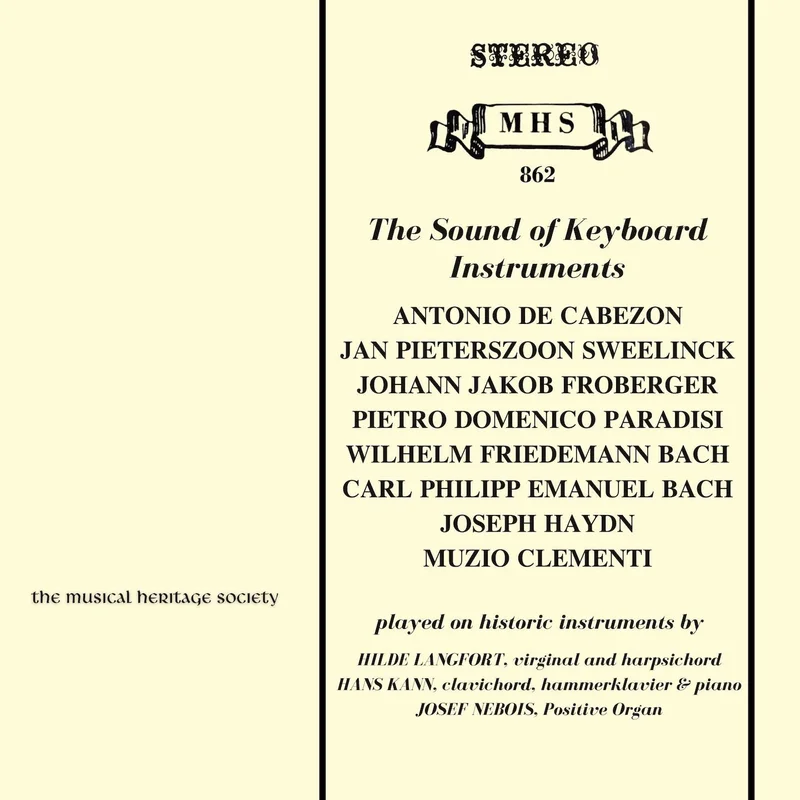
The development of keyboard music is essentially the development of chamber music. Keyboard instruments were originally used in the home as a means of accompanying vocal music and for playing dances. In this respect the relationship between early keyboard music and the heritage of lute songs and dances and fantasias is easy to understand, since the early keyboard pieces are little more than transcriptions or adaptations from the original lute tablature. Interest in keyboard music for the virtuoso was slow to develop, but once begun, it continued until it reached its height in the Romantic era. This recording is an attempt to demonstrate some of the different keyboard instruments commonly used in the home and some of the music composed for them between the 16th and 18th centuries.
HILDE LANGFORT, Virginal and Harpsichord
JOSEF NEBOIS, Positive Organ
HANS KANN, Clavichord, Hammerklavier and Piano
JAN PIETERSZOON SWEELINCK (1562-1621) VARIATIONS on “EST-CE MARS” (No. 58) – Positive Organ
ANTONIO DE CABEZON (1510-1566) DUUIENSELA (Variations) – Virginal
JOHANN JAKOB FROBERGER (1616-1667) TOCCATA No. 16 in C MAJOR – Harpsichord
CARL PHILIPP EMANUEL BACH (1714-1788) ABSCHIED VON MEINEM SILBERMANNISCHEN CLAVIERE, Rondo in E minor, Wq. 66: Poco andante e sostenuto ( Farewell to my Silbermann Clavichord) – Clavichord
JOSEPH HAYDN (1732-1809) FANTASIA in C MAJOR, H. XVII:4 – Hammerklavier
Anonymous (English) PAVANNE ANGLOISE in A – Clavichord
ANTONIO DE CABEZON TIENTO del QUINTO TONO – Positive Organ
WILHELM FRIEDEMANN BACH (1710-1784) POLONAISE in D MINOR, F. 12, No. 4 – Clavichord
PIETRO DOMENICO PARADISI (1707-1791) SONATA in A MAJOR
I. Comodo
II. Allegro
Harpsichord
MUZIO CLEMENTI (1752-1832) SONATA in D MAJOR, Op. 26, No. 3
- Presto 2. Un poco Andante3. Rondo: Assai allegro – Pianoforte
Reviews
There are no reviews yet.